
Thievery
“Ideas are more powerful than guns. We would not let our enemies have guns; why should we let them have ideas?” —Joseph Stalin

I was recently sitting by a stream with my fly fishing guide, Spencer Seim, recording a future episode for my podcast. It was mid-afternoon on a beautiful fall day in southwestern Colorado. In the background, we could hear the river chatting with its rocky structure. The nearly blinding gold leaves of a stand of black walnut trees rustled in the breeze, which also caused the wind chimes on a nearby structure to gently ring. You couldn’t have crafted a more perfect setting for a conversation about a serendipitous event that will continue to shape Spencer’s life.
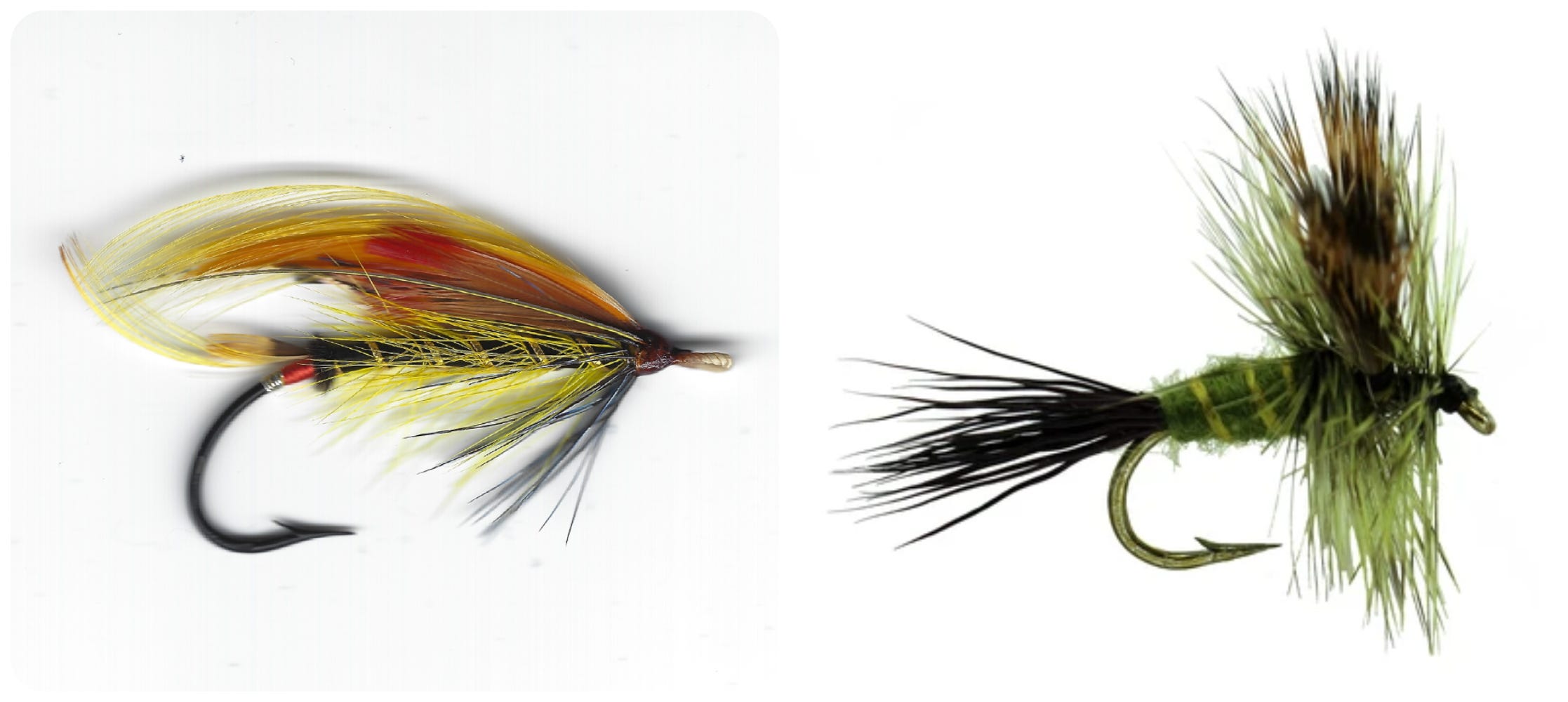
A few years ago, Spencer was again streamside, changing flies for another client, when he accidentally dropped a salmon fly on the ground. Salmon flies are works of art. They are highly colorful and intricately tied, designed to mimic various salmon prey, such as squid, shrimp, and baitfish. They differ from the flies Spencer and his client had been fishing with earlier, which are comparatively dull and meant to imitate common insects that attract trout.1
The client’s reaction to the stunning salmon fly—something like “Holy shit!”—prompted Spencer to share the story of the then-unsolved mystery of the theft of a million dollars’ worth of rare bird skins from the British Museum, most of which were acquired during explorations of Africa and South America. The thief intended to sell the beautiful feathers to salmon fly tiers worldwide.
A former guest on my podcast, author Christian Busch, PhD, explained that serendipity involves an observer’s willingness to seize a chance encounter and act on it—connecting the encounter to something that might be unrelated to the original moment. Spencer’s client could have picked up the salmon fly off the ground, brushed the dust off, and returned it to him.
Instead, he chose to investigate the theft and write a book about it. With Spencer’s help, the two uncovered the mystery, leading to the mega bestseller, The Feather Thief. The book’s release brought in new clients for Spencer, including me, and earned royalties for his client. It’s now being adapted into a miniseries, with Spencer serving as a consultant.
I’m fascinated by serendipity because curiosity fuels it, and the outcome is often innovation and problem-solving. We encounter something unexpected and wonder, ‘What could I do with this?’ 2
That question might have crossed the mind of French candy-maker Nicolas Appert when he studied an empty champagne bottle in the late 1700s. Appert began experimenting with placing various foods in empty champagne bottles and sealing the openings. He then subjected the filled bottles to a steam bath to sterilize them. It wasn’t long before Napoleon, who in the early 1800s was seeking a way to feed his massive army and protect it from food spoilage, learned of Appert’s invention. 3Meals on Wheels in war was born.
I’ve experienced moments of serendipity in my life that were truly pivotal. After retiring from teaching, for instance, I came across an advertisement from an educational publisher for a reading editor position. I applied and didn’t get the job, but my application was forwarded to another department, which eventually hired me. Over the next forty years, I climbed from an entry-level role as an editorial assistant to leading all educational publishing.
I increasingly worry, though, that we’re losing our serendipitous edge.
We’re overwhelmed by information.
The old analogy of drinking water from a fire hose is no longer adequate when it comes to information overload. Now, it’s like we’re on a station platform as a bullet train of content options screams past us. Perhaps we choose one source of information, but the Siren-like algorithms beckon us to scroll endlessly.
We’re fascinated with A.I.
A.I. has become a huge time-saver, but those who mindlessly use whatever it serves up in response to queries will undoubtedly weaken their critical thinking and creativity skills over time.
We’re reeling from a new era of anti-intellectualism.
One of the books I read during my master’s program was Richard Hofstadter’s 1964 Pulitzer Prize-winning, Anti-Intellectualism in American Life. Hofstadter explained that anti-intellectualism is “a resentment and suspicion of the life of the mind and of those who are considered to represent it; and a disposition to constantly minimize the value of that life.” That idea remains just as relevant today as it was over 50 years ago, as evidenced by the current Administration’s ever-expanding tentacles that attempt to restrict research and thought.
University research funding is being withheld as a form of blackmail to pressure compliance with administrative policies.
Books are being banned, and our history and civics lessons are being sanitized to remove darker elements of our past in favor of a more glorified story.
The mainstream media is increasingly accused of spreading fake news and being the enemy of the people.
Additionally, the religious right works to weave Christian Nationalist ideas into everyday life.
None of this happens by chance. One trait of authoritarian regimes is to show disdain for and attempt to crush free thought and expression that could challenge the new order.
Overall, our ability to think freely and critically is being undermined. Stolen.
I worry that we’re raising a generation of kids who aren’t being challenged to think for themselves; not to learn what to think, but how to think. They’re mainly engaged in the same curriculum that was created more than 100 years ago. They’re tested on what they know, not necessarily on what they can do with their knowledge.
I worry that we’re confronted with a growing number of pundits, provocateurs, and preachers who push their version of truth. We don’t need to think; we merely need to listen.
And I worry that in some dimly lit science lab, a tired, media-battered technician will mechanically move slide after slide under the microscope, missing the detail that could have made them run into the hall shouting, “Holy shit! I think I found a cure for cancer!”
When I was in elementary school, I was often caught looking out of our classroom’s windows. “Jeff is a good boy,” my report card read, “but he needs to avoid daydreaming and apply himself.” But daydreaming isn’t just an idle mind; it’s preparing the mind for observation, self-training for those moments when the bullet train rushes past us and the universe asks, “What can you do with this?”

You can listen here to my first podcast interview with Spencer, my most downloaded episode in 7 years.
My recently recorded interview with Spencer, the episode we taped streamside, will air on 11/18.
You can listen here to my interview with Dr. Christian Busch.
The salmon fly, the Black Goldfinch, is on the left; a common trout fly, the Green Drake Wulff, is on the right. These are not to scale.
Two classic examples of serendipity were the discovery of Penicillin and the 3M Sticky Note. Both were discovered accidentally. (Thanks to Wikipedia here for the following explanations.)
The Scottish physician Alexander Fleming was the first to show that “penicillin” had antibacterial properties. On 3 September 1928, he observed by chance that fungal contamination of a bacterial culture appeared to kill the bacteria.
In 1968, Spencer Silver was trying to create a strong adhesive but instead developed a low-tack adhesive made of tiny, pressure-sensitive bubbles. This adhesive was strong enough to hold paper but could be removed without tearing or leaving residue. It was considered a “solution without a problem” because there was no immediate application for it. In 1974, Art Fry, a colleague of Silver’s, recalled the adhesive and realized it could be used to create a more effective bookmark. He wanted a bookmark that would stick to the page and be removed without damaging the book.
But…
I’m a romantic at heart, not a scientist, so my favorite example of serendipity is the movie Serendipity—a chance encounter of two holiday shoppers at a glove counter leads to, well, you know.
https://theausteritykitchen.com/2011/10/26/napoleon-of-preserved-food-html/
Thanks, Debbie. I'm finding the adage "less is more" is one way to survive the onslaught. I'm trying to throw overboard a lot of what I had signed up for. A cluttered space is a cluttered mind.
The skins were supposed to be used for research. I don't know how much of that was going on, as they were carefully laid out in drawers. The thief, of course, knew right where to look.
I recently read a meme that went something like, "If you want to know what real theft looks like, go to the British Museum."