
Crossing
Aging, friendships, and the small forces that move us forward

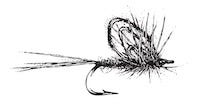
For the past couple of weeks, I’ve been reading John Gierach’s All the Time in the World. Gierach, who passed away in 2024, was arguably the best fly-fishing writer of his day. A line from another of his twenty-plus books, “The purpose of fly fishing isn’t to catch fish, it’s to go where fish are caught,” underscores that his focus was often less about the technical aspects of the sport than its soothing, transformational power. Flowing, sun-dappled water, a breeze, and a songbird serenading the scene have immense power to heal the life-weary soul. Landing a trout is the bonus.
I usually read Gierach at night after I put away the other books I’m reading for my podcast interviews with their authors. His writing is like melatonin for the psych—poetic, calming, and reflective.
It’s that reflective quality that often triggers a train of thought, taking me beyond the page. In the title essay of All the Time in the World, Gierach explores how the passage of time continues to shape the sport and how the loss of an old friend stayed with him long after his ashes were scattered. Nothing escapes the passing of time, and that theme took me back to when I was a teen and would stumble into the kitchen for breakfast. I often found my then-retired dad reading the obituaries in the Chicago Tribune. I didn’t understand back then why he read that section of the paper, but I have a couple of theories now. For him, obituaries might have served as a crude measuring stick, a way to compare his life to someone else’s. Or maybe he saw them as a marker of time. When he read about the lives of people from the generation before his, it may have reminded him of his own mortality.
I will admit that reading about the untimely passing of certain individuals grabbed me by the collar. When Apollo 11 astronaut Neil Armstrong and Eagles musician Glenn Frey died, heroes of mine, I remember muttering, “Holy…shit.”
The ticking of the clock on the wall seems to grow louder and louder.
So how do we quiet the clock? A recent article in the New York Times briefly outlined “24 Secrets to a Healthier Life.” Strong relationships were cited as a key factor to healthy aging, and the author didn’t just mean spouses. Like strength training for muscles, strong relationships are strength training for the psyche and soul.
Our Relationships Are Our Biosphere
It is in our interest to keep the biosphere healthy and happy, because we live inside of it. You have to operate like a team with the other members of your ecosystem. That means connecting with your own feelings and needs, and those of the people around you.
— Terry Real Therapist and founder of Relational Life Institute
I marvel when someone mentions that their relationship with so-and-so began in grade school. Grade school? I recently looked at a class photo from elementary school, and while I could recognize the faces, I only knew one student by name: mine!
I have one friend from high school, but we rarely stay in touch. I would be sad to hear of his passing because he was a major reason why I walked upright through high school. Doug was a borderline member of the in-crowd, and I was a charter member of the unseen majority in a class that numbered almost a thousand kids. But somehow we connected. We hung out in his basement listening to Jose Feliciano’s “Light My Fire” repeatedly, and we often double-dated. Sometimes we dated the same girl, though not at the same time.
In college, I lived on a dorm floor that was more like a fraternity, and I loved some of those guys like brothers. But I lost contact with everyone the day my diploma arrived in the mail.
Deep relationships from my careers in teaching and publishing have gradually faded over time for various reasons.
Why this loss of relationships? Maybe it’s you, the old self-critical, finger-pointing me suggests. Or maybe it’s just personal orbital mechanics. The planets in our solar system follow their own orbits that, over time, bring them closer to and then farther from the other planets. Maybe it’s the same with people. A law of the universe.
Now that I’m retired, most of my relationships are virtual. A lot of people decry tools such as Zoom and Google Meet, but I’d be a true loner without them.
I’ve interviewed over 400 people on my podcast. Most guests look at the experience as a single point in time. We talk about their work or their latest book, but when I stop the recording, the association generally ends. “Thanks, it was nice talking with you.”
A few interviewees, though, have become friends with whom I regularly communicate. Several have later served as co-hosts on topics of mutual interest and even recommended new guests. I’ve fished with two of them.
One of my recent podcast guests, a writer, discussed the importance of building a supportive community because writing can be a very lonely activity. As proof, she mentioned her website “Lonely Victories.” I smiled because I am starting to build a writer community. The cornerstone is my exceptionally supportive and patient coach, who regularly reminds me that I have more to offer about myself than what’s in my first draft. I’ve connected with a few dedicated aspiring writers through our relationship, including one I’m lucky enough to live near. So, we sometimes meet in downtown Manhattan—an actual in-person writer friend.
Fly fishing has become another way for me to build relationships. I tend to rely on the same guides when I fish, and I feel confident that my connection with a few of them is evolving from client to friend. We’ve scaled the red “NO TRESPASSING” barbed wire fence that was there in the early days of our encounters, and now talk freely about past lives, politics, and our significant others. We laugh a lot, too, and not just at my casting.
All this to say, life at my desk—the portal to a largely virtual world—has become rich, which is a good thing at any age but especially as I sit here at 75. I now know, too, what Gierach meant when he spoke of the recent passing of his friend, “Paul always acted like he had all the time in the world, and now he does.” Those of us who are still on the green side of the lawn don’t. The bathroom mirror reminds us of that every day.
All the hand-wringing worry in the world won’t help me or anyone else avoid the inevitable end of days. We can slow down our attitude toward it, though. Albert Einstein suggested that time is not absolute but relative, as expressed in the concept of “time dilation,” which states that time moves more slowly for moving objects. So…I need to continue crossing aging’s creaking mental bridge—from worrying about dying to delighting in still living. And nurture the forces that help me.
I’ve thought about ending the podcast many times. It’s a lot of work, and it costs me a significant amount of money to produce. But I’m still meeting interesting people and, judging by the volume of daily downloads, sparking my listeners’ curiosity. For now, I’ll continue to hit the “Record” button.
There’s always another article to write, or that elusive memoir to finally coax out of the battered filing cabinet of my past. Of no small benefit, there’s always more to learn about the craft of writing by continuing to work with my coach.
And finally, there’s always new water to wade into with a guide or friend, gratitude to feel for the warmth of the sun on my back, and the anticipation of a trout rising to my fly.
This week’s guest picks up on the theme of time and mortality that I spoke about above. Matthew Collins interviews the sons of World War II veterans to capture their remembrances about their dads’ service and enrich the historical record.
If you’re the son (or daughter) of a WWII veteran, or if you know someone who is, please check out this episode preview. I provide Matthew’s contact info at the end.
Jeff, As always, I look forward to reading and listening to your work. In this article you touch on the subject of long-term relationships and the bonds of fly fishing that are developed and nurtured over the years.
Having been a guest on your podcast and having guided you on numerous adventures, I can’t help but tell you that the feelings you describe about those fly fishing relationships are very much reciprocal.
As you could imagine, at the end of a season many of the faces and names begin to run together. But there are always a few rare exceptions—clients who leave a mark, a message, or an impression that goes well beyond the client-guide relationship. You have certainly been one of those memorable and lasting relationships.
Quite frankly, I’m glad that the development of relationships like this is so rare. As a guide I need to make a living, yet I find it difficult to charge someone whom I now consider a friend and even a mentor in numerous ways. Of course this is my livelihood, so it’s necessary to try and keep those lines from blurring, but with you I feel truly blessed to have gained more of a friend than a client.
And if I ever had to choose one over the other, our friendship would make that decision easy.
Brew Moscarello
Tricounlimited.com
My stepson and I decide, before we pack up our rods and drive to the Bay, whether we want to go fishing or we want to go catching.
And I'm still hopeful enough to shop for green bananas.